Fall Guide · Thomas Trucking, Richmond BC
Keep Your Yard Working Through the Rain
A short seasonal guide for warehouse, plant, and logistics yards on the coast, where a yard that drains well in October can still be a mud problem by January.
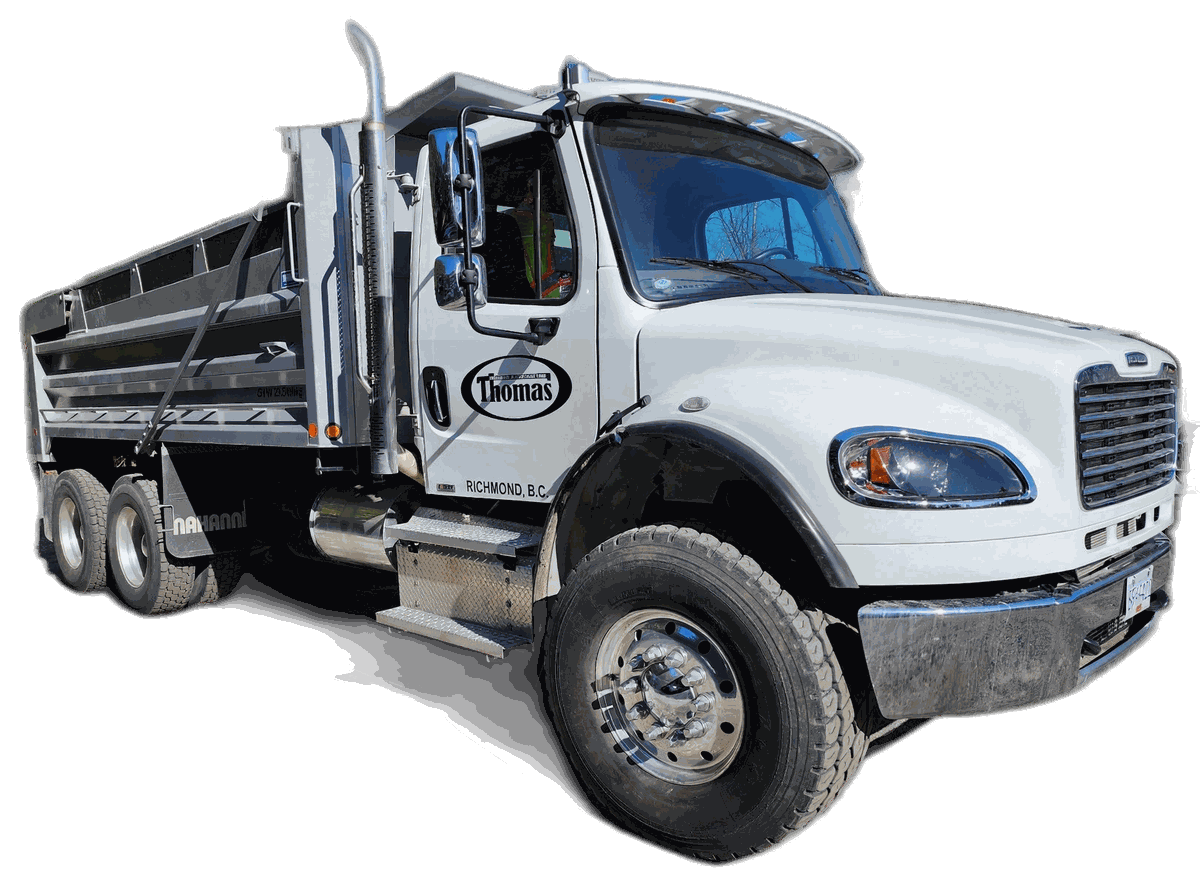
1. Fill potholes with road base, not with whatever is on hand
Potholes in gravel yards grow fast once rain starts, because every truck pass pumps water and fines out of the hole. The fix that lasts is road base gravel, placed in a layer of about four inches, wetted, and packed. Loose fill and crushed rock without fines wash out within weeks. Grade the area so water sheds to the yard edge rather than sitting in the wheel tracks, and crown the main travel lanes slightly if your yard allows it.
2. Walk your drainage before the first big storm
Catch basins in truck yards fill with silt, pallet wrap, and leaf litter. Check every basin and drain grate on the site, clear what sits on top, and confirm the water actually moves. Swales along fence lines and lot edges slowly fill with settled material over a few seasons; one machine pass to regrade a swale in fall is far cheaper than pumping a flooded loading area in December. Note where water crosses the yard and deal with that path first.
3. Protect the dock and loading areas
Standing water at dock doors means wet product, slippery forks, and ice risk on the rare cold mornings. The apron in front of each dock should slope away from the building. Where it has settled, build it back up with packed road base in shallow layers. Check the ground under trailer landing gear as well; pads or a gravel build up stop trailers from sinking into soft spots mid winter.
4. Order in split loads and repair in rounds
Most yards do not need a full rebuild. They need a few yards of road base in the worst lanes now, and a few more after the first storms show the next weak spots. Split loads let one truck bring road base and a second material together, and small top up loads through the season cost less than one spring regrade of a yard that was left to rut all winter. Keep a marked map of the areas you filled; the pattern tells you where the base has failed for good and where a proper excavation and rebuild will pay off.
5. Keep a dry working corner
Set aside one firm area for container placement, pallet stacks, and equipment parking that stays out of the mud. A gravel pad built in fall carries a yard through the season and gives drivers a clean place to work. It also protects the rest of the yard, since traffic concentrates on ground that can take it.
A simple order of work
- Drainage and catch basins first
- Road base in the main travel lanes and at the docks
- Swale and fence line regrading where water crosses the yard
- Top up loads after the first heavy storms
- A firm pad for containers and equipment before the ground softens
Prepared by Thomas Trucking and A Little Bit Deliveries, Richmond. The full guide and our material list live at www.thomastruckingrichmond.com and if you would rather talk it through, call 778 907 5993 and Sarah on our team will take the details.